在国家深入推进“新型工业化”与“新一代人工智能”战略、加快培育“新质生产力”的宏大背景下,未来工业智能化(Industrial AI)对高实时性、轻量化、极端安全和低算力消耗提出了极其严苛的要求,重构智能化工业技术底座意义重大。近来,智能化工研究院院长、工业智能国际联合实验室主任、数据科学学院王殿辉教授带领的团队,在人工智能基础理论和算法研究取得系列进展。一年之内,该团队在多个国际顶级期刊上发表高质量学术论文12篇,用事实证明了团队在轻量化随机配置网络学习理论与工业应用方面的持续创新能力与学术影响力。
长期以来,基于误差反向传播(BP算法)的深度学习和传统的随机学习技术(如RVFL)存在难以调和的固有缺陷。王殿辉教授团队在其2017年创建的随机配置网络(SCN)原创研究成果的基础上取得了新的突破,攻克了传统机器学习在算力、结构和收敛性上的底层瓶颈。该理论体系针对性地打破了“激发函数必须可导”的学习枷锁,攻克了“网络结构如黑盒,只能靠试错”的拓扑瓶颈,并彻底解决了“传统随机学习无法保证全局收敛”的信任瓶颈。近期,团队在基础数学理论层面取得重大突破,例如提出了贪婪随机配置网络(GSCN)及其结合牛顿-拉夫逊(NR)与粒子群优化(PSO)的进阶变体(NR-GSCN与PSO-GSCN)。在DB1基准测试中,NR-GSCN不仅将测试均方误差(MSE)相较于标准SCN大幅降低了66.7%(降至极低的0.0004),还将模型体积缩小了42%。

相关论文(均为通讯作者):
1.X. Yan, D. Wang, and I. Y. Tyukin, "Deeper insights into the learning performance of stochastic configuration networks," Knowledge-Based Systems, vol. 345, Art. no. 116103, Jun. 2026.
2.X. Yan, D. Wang, and I. Y. Tyukin, "Theoretical advances on stochastic configuration networks," IEEE Transactions on Neural Networks and Learning Systems, vol. 37, no. 1, pp. 467-481, Jan. 2026.
3.D. Wang, N. Xie, and X. Yan, "Federated stochastic configuration networks with universal approximation property," IEEE Transactions on Artificial Intelligence, early access, 2025.
团队围绕基础理论与复杂工业现实的深度融合开展系统研究及创新,极大地丰富了轻量化随机配置网络的研究版图。其研究内容全面涵盖了随机配置学习理论、联邦随机配置学习理论、循环随机配置网络、模糊随机配置网络及自组织学习、核随机配置网络、粒随机配置网络。这些新型架构不仅实现了大数据的快速构建与高效解析,还极大提升了非线性动态系统建模中的鲁棒性与特征提取能力。针对复杂工业数据建模中缺乏逻辑推理和先验知识利用的难题,团队在核随机配置网络(KSCNs)的基础上,创新性地融合了Takagi-Sugeno-Kang(TSK)模糊推理系统,提出了模糊核随机配置网络(F-KSCNs)。该模型通过模糊规则构建多个局部子模型,并利用自适应加权聚合输出,使网络具备了类似人类思维的逻辑推理能力与高度可解释性。

相关论文(均为通讯作者):
1.S. Romanov, D. Wang, and D. Kaplun, "Fast building of stochastic configuration networks for big data analytics," Engineering Applications of Artificial Intelligence, vol. 163, Art. no. 113137, Jan. 2026.
2.D. Wang and Y. Chen, "Robust kernel stochastic configuration networks for uncertain industrial data regression," IEEE Transactions on Industrial Informatics, early access, 2026.
3.G. Dang and D. Wang, "Recurrent stochastic configuration networks with hybrid regularization for nonlinear dynamics modeling," IEEE Transactions on Cybernetics, vol. 56, no. 6, pp. 3565-3578, Jun. 2026.
4.D. Wang and G. Dang, "Recurrent stochastic configuration networks with block increments," Neural Networks, vol. 193, Art. no. 107986, Jan. 2026.
5.Y. Chen and D. Wang, "Kernel stochastic configuration networks for industrial data regression," IEEE Transactions on Industrial Informatics, vol. 21, no. 12, pp. 9353-9364, Dec. 2025.
6.Y. Qiu and D. Wang, "Granular stochastic configuration networks for uncertain data modeling," Knowledge-Based Systems, vol. 328, Art. no. 114196, Oct. 2025.
7.Y. Chen and D. Wang, "Fuzzy kernel stochastic configuration networks for industrial data modeling," IEEE Transactions on Fuzzy Systems, vol. 33, no. 9, pp. 3001-3011, Sep. 2025.
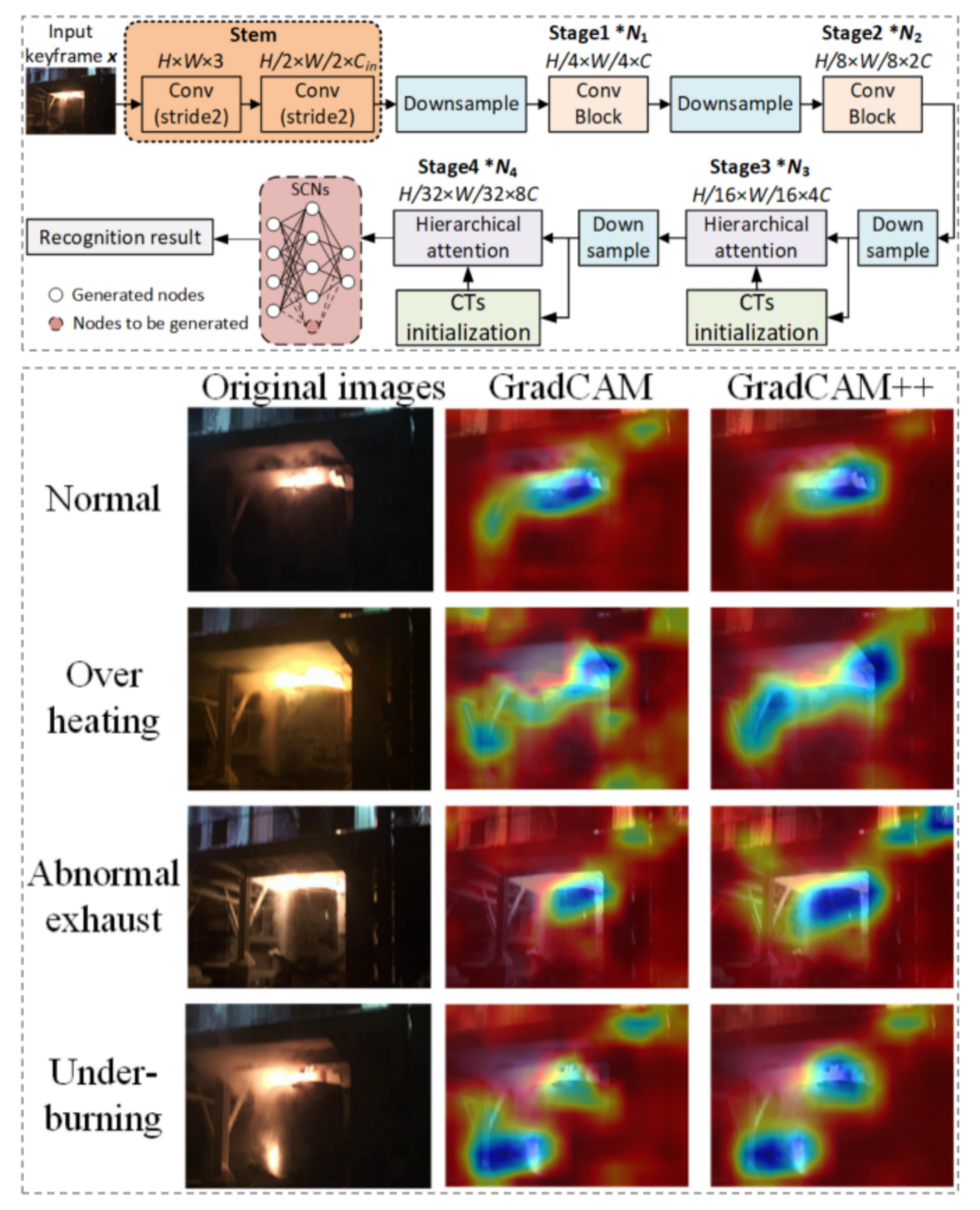
团队将基础数学理论与复杂工业现实深度结合,积极响应了国家关于推动制造业高端化、智能化发展的号召,为未来工业智能化的“边缘计算”与“数据-物理双驱动”提供了关键的技术底座。轻量随机配置网络理论体系被视为重构未来智能化工业底座的钥匙,它不仅引领工业智能化走向“边缘计算”与“低碳AI”,实现了工业大数据的“低成本实时动态建模”,更有效赋能了高危高精工业决策的“工业级高可靠性”。在真实的电熔镁炉生产数据测试中,实现了高达94.59%的冶炼状态识别准确率,并达到了21.79 img/s的极速推理吞吐量,完美赋能了高危工业决策的“工业级高可靠性”与极低延迟要求。
相关论文(均为通讯作者):
1.X. Zhang, W. Li, and D. Wang, "DeepSCN-based long short-term memory and reinforcement learning for adaptive video summarization," IEEE Transactions on Industrial Informatics, early access, 2026.
2.X. Zhang, W. Li, and D. Wang, "SCN-based adaptive LSTM and transformer for fused magnesium furnace state recognition," IEEE Transactions on Industrial Informatics, vol. 22, no. 5, pp. 3669-3680, May 2026.
本年度发表的12篇代表性论文,均由王殿辉教授作为通讯作者,发表于《Knowledge-Based Systems》、《Engineering Applications of Artificial Intelligence》、《IEEE Transactions on Industrial Informatics》、《IEEE Transactions on Cybernetics》、《IEEE Transactions on Neural Networks and Learning Systems》等国际顶级期刊。
文章链接:https://doi.org/10.1016/j.engappai.2025.113137
https://doi.org/10.1109/TNNLS.2025.3608555
https://doi.org/10.1109/TAI.2025.3592179
https://doi.org/10.1016/j.engappai.2025.113137
https://doi.org/10.1109/TII.2026.3688556
https://doi.org/10.1109/TCYB.2026.3657148
https://doi.org/10.1016/j.neunet.2025.107986
https://doi.org/10.1109/TII.2025.3598447
https://doi.org/10.1016/j.knosys.2025.114196
https://doi.org/10.1109/TFUZZ.2025.3580614
https://doi.org/10.1109/TII.2026.3690528
https://doi.org/10.1109/TII.2026.3650932